



Before she was an actor, a filmmaker, or a VJ, Sook-Yin Lee made music. Today she returns with 72RHR, her first album in five years—and it’s one you need to tune in to.
Truly a multidisciplinary artist, Lee is known for her uninhibited creative expression across mediums—whether she was running wild as a VJ for MuchMusic’s The Wedge, starring in John Cameron Mitchell’s controversial queer sex comedy Shortbus, or more recently, making a statement about sex work in Paying For It, her film based on her ex Chester Brown’s bestselling graphic novel about their relationship.
Lee has always refused to be boxed in, so growing up in a traditional and extremely strict Chinese Canadian family was tumultuous, to say the least—ultimately leading her to run away from home at 15. It was art, she tells us, that saved her life.
“Growing up in my house, there was a lot of mental health challenges, and a lot of violence…and that’s something that I had to run away from,” Lee says. “I really ran for my life, because I knew that if I stayed there, it would not be good.”
As a shy teenager, Lee enrolled in a new school, and began taking theatre and visual arts classes. When she struggled to express herself through words, she would make art instead. In her Grade 11 creative writing class, she wrote her very first song—“Closet Door”, an atonal, sapphic, poem-turned-song channelling her frustrations at not fitting into a nuclear family.
“A lot of my earliest songs were extremely didactic,” Lee says. “There was a lot of pent-up frustration, anger, upset, curiosity, and excitement in me.”
This was the energy she brought to Bob’s Your Uncle—an art rock, post-punk group of misfits in Vancouver’s vibrant underground arts scene, and Lee’s first band. They released three albums in the late 80s and early 90s, a transformative time for Lee as an artist. It was here that she first discovered how it feels to sing from her soul.
“When I sing from my soul, I can really feel it. A lot of singers would like to tell you that they’re always singing from their soul, but it’s not true,” she says. “It’s hard to describe, but it’s like this feeling of truth and expression.”
This feeling became a guiding force for her, something she describes as “a sensory rod”—an instinct she carries across artistic mediums. It’s her ability to tell when an actor in her film needs to do another take, or when a song she’s making finally feels right.
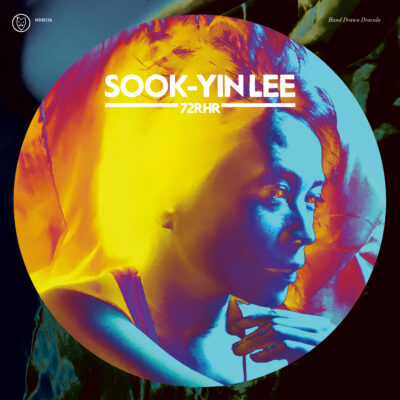
With her new album, 72RHR, following this creative instinct meant not coming to any conclusions about the difficult subject matter she addresses on the record—but simply sitting with the upheaval we’re all feeling in the world right now.
“There’s a clash of economics, of technology, polarization, addiction to cell phones…trying to feed our families, trying to get a job, so many challenging things,” Lee says. “There was a kind of Taoist principle of embracing and surrendering to all, good, bad, ugly, wonderful, because it’s all here.”
The album’s title, 72RHR, refers to 72 beats per minute—the optimal resting heart rate in a state of relaxation. Drawn to the idea of working within a creative constraint, Lee decided that all of the songs on the album would be made at the tempo of 72 BPM. But in the world we live in today, actually achieving that state of relaxation can be a challenge—something Lee has experienced herself.
“Almost 10 years ago, I hit a really challenging place. I probably had a nervous breakdown, and I had discovered a meditation practice that really helped me through that period of time,” she says. But for Lee, meditation wasn’t an instant feeling of peace—it was an emotional journey that went to some heavy places, but would ultimately lift her up at the end. This was the experience she wanted to replicate on her album.
“People just assume it’s going to be like a new age relaxation record, but it’s not that,” Lee says. “I wanted to take that 72 beats per minute and see what kind of depths and different kinds of psychological and atmospheric feelings that I could explore within that.”
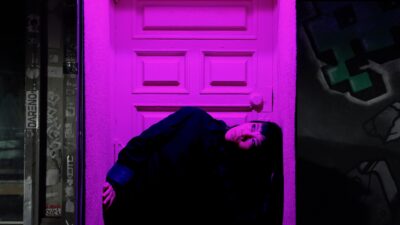
For an artist like Lee, and an album like 72RHR, there’s no question that the release party will be a one-of-a-kind, multimedia mashup. On June 26, Lee will transform The Baby G in Toronto into a multi-arts salon, with performances from bands and DJs, as well as saxophonist Karen Ng, poets Lee Suksi and Stevie Manning, and dancer Bee Solomon.
“Instead of just band, band, band, it’s like, what is going to happen? Anything,” Lee says.
This is a sentiment that also rang true in Lee’s days at MuchMusic. She looks back on her time as a VJ fondly, describing years of wild antics that shaped her first foray into media. With so many hours to fill, and with free rein from visionary MuchMusic founder Moses Znaimer, Lee was free to simply be herself. In between meeting bands, she would pull pranks and run social experiments—like lying down on the streets of Toronto, playing dead, seeing if anyone would stop. In her last broadcast for MuchMusic in 2001, she famously mooned the camera live on air.
“That’s what I was up for as a performance artist. I really wanted to see what I could get away with on television,” she says. “That was really supported in those early years of MuchMusic.”
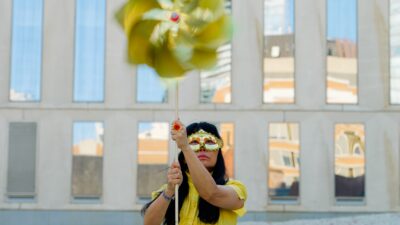
Part of what drew Lee to MuchMusic was the chance to give a platform to those who don’t usually have access to the media. Uplifting marginalized communities has been important to Lee throughout her career, including with her latest film Paying For It. Directed and co-written by Lee, the film is an adaptation of Chester Brown’s graphic novel of the same name, which Lee describes as a political treatise for the decriminalization of sex work.
Paying For It centres on Chester and Sonny (a slightly fictionalized version of Lee)— and the events that unfold when they redefine their relationship, and Chester begins sleeping with sex workers. The film explores the nuances of love, sex and intimacy, centres the perspectives of sex workers, and challenges stigmas around consensual sex work.
“I love to be able to take some of those themes, but also wrap them up in not so much a didactic thing, not like my early punk songs…making it more open, throw out questions, and invite people in,” Lee says. “Because people, they’re not stupid…but some of us have grown up sheltered or ignorant, and we can unlearn our ignorance. So I try, in my way, to couch it within a story that people can approach and not feel like they’re being lectured at, but can actually just see themselves in.”
What’s next for Lee, after her album rollout? She tells us her upcoming project is especially close to her heart—a look back on her upbringing, inspired by her relationship with her younger sister. “It’s challenging and difficult, and it’s also very funny,” Lee says. She’s still working out the details—it might be in the form of a limited series, two feature films, or a book. But no matter the medium, it’s bound to be a beautiful, full-circle moment for Lee, one we know will, like all of her work, “hit your heart, head, and funny bone.”
72RHR is out now, and tickets for Sook-Yin Lee’s album release party are available here.
 Follow Us On Instagram