




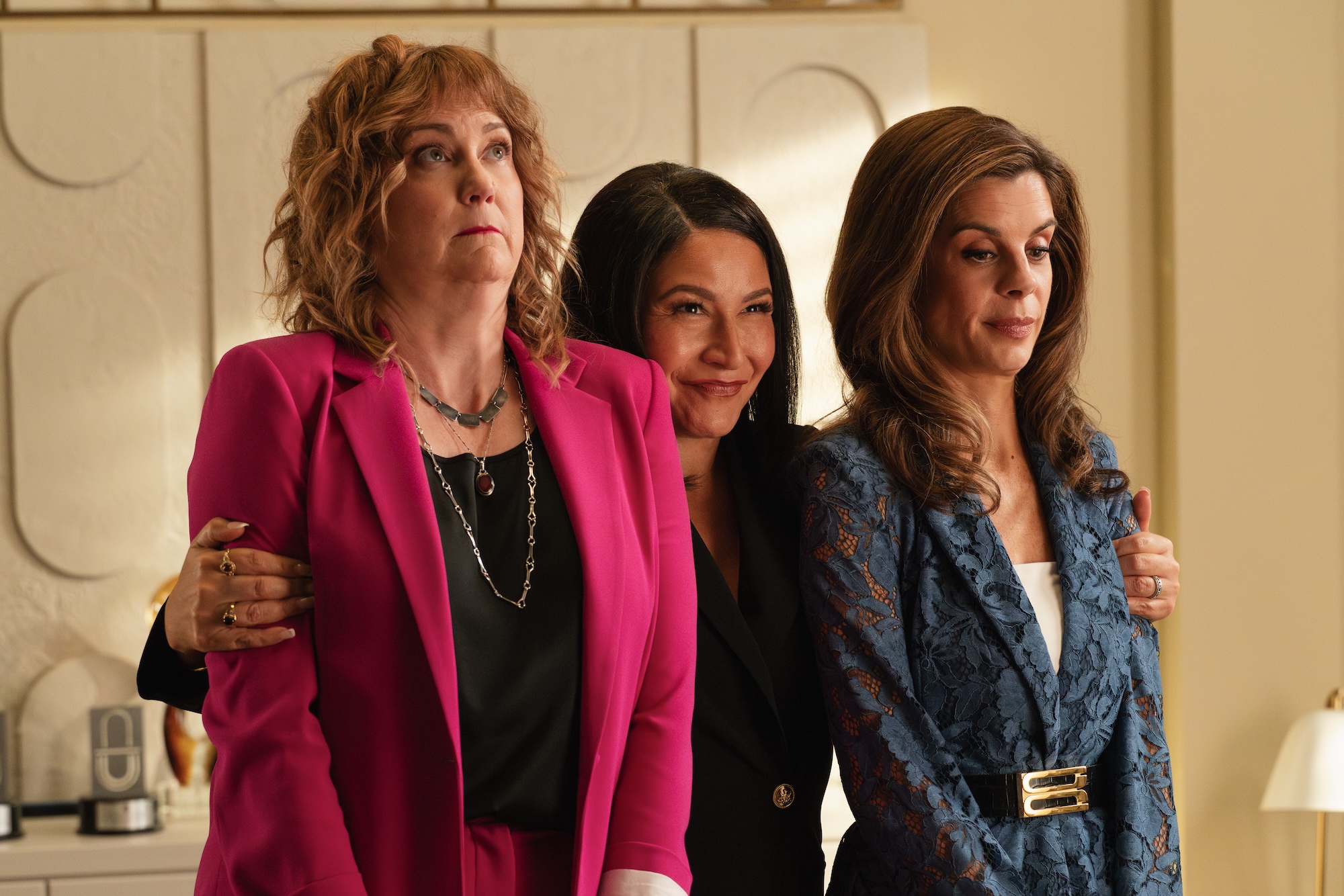
Last year, Small Achievable Goals brought menopause to the forefront. Finally, two characters on our screens were openly addressing the struggles of menopause—and laughing their way through it. With more than 25.3 million views across social media, it’s clear that this honesty is resonating, and viewers are ready for more of Kris and Julie’s relatable adventures.
This month, as the second season of the comedy series airs on CBC Gem and CBC TV, co-creators and stars Jennifer Whalen and Meredith MacNeill are diving deeper into the realities of menopause, showing that it can manifest as much more than hot flashes and mood swings.
As Kris and Julie’s menopause podcast starts to take off, the duo is still in the thick of menopause themselves—and the hormonal hurricane that comes along with it. While Julie grapples with brain fog and learns to embrace imperfection, Kris struggles with her mental health—a common experience among 15-50% of perimenopausal and postmenopausal women.
Ahead of the Season 2 premiere of Small Achievable Goals on January 6, Whalen and MacNeill sat down with SheDoesTheCity to share more about the mental health and body image challenges their characters face this season, the touching reactions they received after Season 1, and their messages to viewers struggling to cope with menopause symptoms.
What’s new in this season of Small Achievable Goals? Where do we find Kris and Julie in Season 2?
Jennifer Whalen: Well, to kick things off, the first thing that’s really new is that we have a new boss, Amanda. The company has sold, and we left on a cliffhanger last year…so there’s a new sheriff in town. So that’s a new thing for Julie and Kris to deal with.
Meredith MacNeill: She’s played by Tamara Podemski. She’s absolutely brilliant. And then for Kris and Julie… in this season, they’re dealing with their menopause symptoms, and what that does to their relationship and their relationship with work.
This season addresses how anxiety can be a common menopause symptom. Meredith, what was it like for you to play a character experiencing mental health challenges?
MM: On the show, it goes into anxiety, which goes untreated, so then it leads into depression, and then there’s suicidal ideation. So we really do the full ramp-up with Kris of this emotional mental health arc. And I think to play it, and to write it, I felt a lot of fear, a lot of responsibility. So many women and people have this issue. You’re not seeing it a lot on television, especially in the comedy space. So I just felt like a lot of responsibility to get it right.
As you dive deeper into the difficult realities of menopause, how do you find that balance between humour and the show’s vulnerable moments?
MM: All comedy, all heartbreak come from the same place. So it all starts with truth. And I think what people relate to the most in any comedy is when you tell the truth. Vulnerability is this wonderful pool to dive into, and it’s just what you extract. So we’re all coming from the same pool. To be funny or to break someone’s heart, you should be able to do both if that moment is truthful. So that’s why, for Jen and I and Julie and Kris, a lot of the moments that you’re seeing the comedy from are really coming from vulnerability.
JW: Menopause is a time of having to confront some truth. Truth makes you laugh. Truth breaks your heart. There’s a beautiful marriage between those and it’s satisfying to have them both in one little package.

Body image is a lifelong struggle for many women, and is also addressed this season in Julie’s storyline. Jennifer, how did you approach your character’s struggle with her appearance?
JW: It was terrifying, to be honest. I was exposing a lot of things that I feel about myself and looking at myself on screen. I really tried to go there—like, the worst things that I try not to say. The scene in the first episode where Julie confronts that naked in a mirror, I was so scared to do that. Not only because I would have to do it and feel it, but also because the reality of it is, you’re filming it, you’re in a room full of people, and you’re admitting your most vulnerable thoughts.
The series also shows how despite their various symptoms, Kris and Julie still have to show up every day and face the challenges in their work and personal lives. Do you have a message for anyone out there who is struggling with menopause symptoms?
MM: In the second season, we start to tackle anxiety, depression and mental health. My heart goes out to everyone and all women having to show up for work, show up for life, show up for their children, show up for their partners, and show up for their friends. Just show up, suffering in silence with mental health issues. I’d like to say you’re not alone, and we see you.
JW: I’d like to say it does get better. Keep going, talk to your friends and reach out when you need help, and don’t isolate yourself or feel that you’re alone, because you’re not. There’s life on the other side. It just feels like, “Oh my god, is this my new reality?” But it does get better.
MM: Also, if you don’t like what your doctor is saying, keep asking the questions until you feel like you have the answer. Don’t be gaslit.

The first season of Small Achievable Goals aired in early 2025. What are some reactions to the series that have stuck with you?
MM: Jen and I always like to create content that sparks curiosity and conversation. We don’t have all the answers, but we want to create platforms and situations where people can have a dialogue about it. A lot of the reactions were coming through social media. On Instagram, I would be moved daily to tears by the stories that women were telling. Some of the clips we were sharing on the show were of women facing the medical system, women facing what it is to be our age and with menopause…and then immediately that platform created a space where they wanted to share their story. It was kind of mind-blowing.
What was something you both learned about menopause in the making of this series?
MM: What terrifies me is that I still don’t know very much. We are so behind when it comes to menopause and where we should be in the knowledge of it. So even now, if I have friends, or if I run into other women, I’m asking them just as much advice as they’re asking me. 50% of the population goes through it…but it’s been this private experience for so long.
JW: In this season, my character ends up going on HRT, and it’s kind of presented in the media as a wonder drug that will solve everything. It absolutely is incredibly helpful, but it doesn’t solve everything. Everybody who has a uterus who goes through this is unique. You have to advocate for yourself, and honestly, what you have to do is relearn how your body works.
This interview has been edited for length and clarity.
Season 2 of Small Achievable Goals is available to stream now on CBC Gem. New episodes drop on Tuesdays.
 Follow Us On Instagram