


In The Sandbox, everyone is being watched. Premiering in North America at Hot Docs Festival this week, director Kenya-Jade Pinto’s debut feature documentary is an urgent, unsettling depiction of the human cost of surveillance technologies.
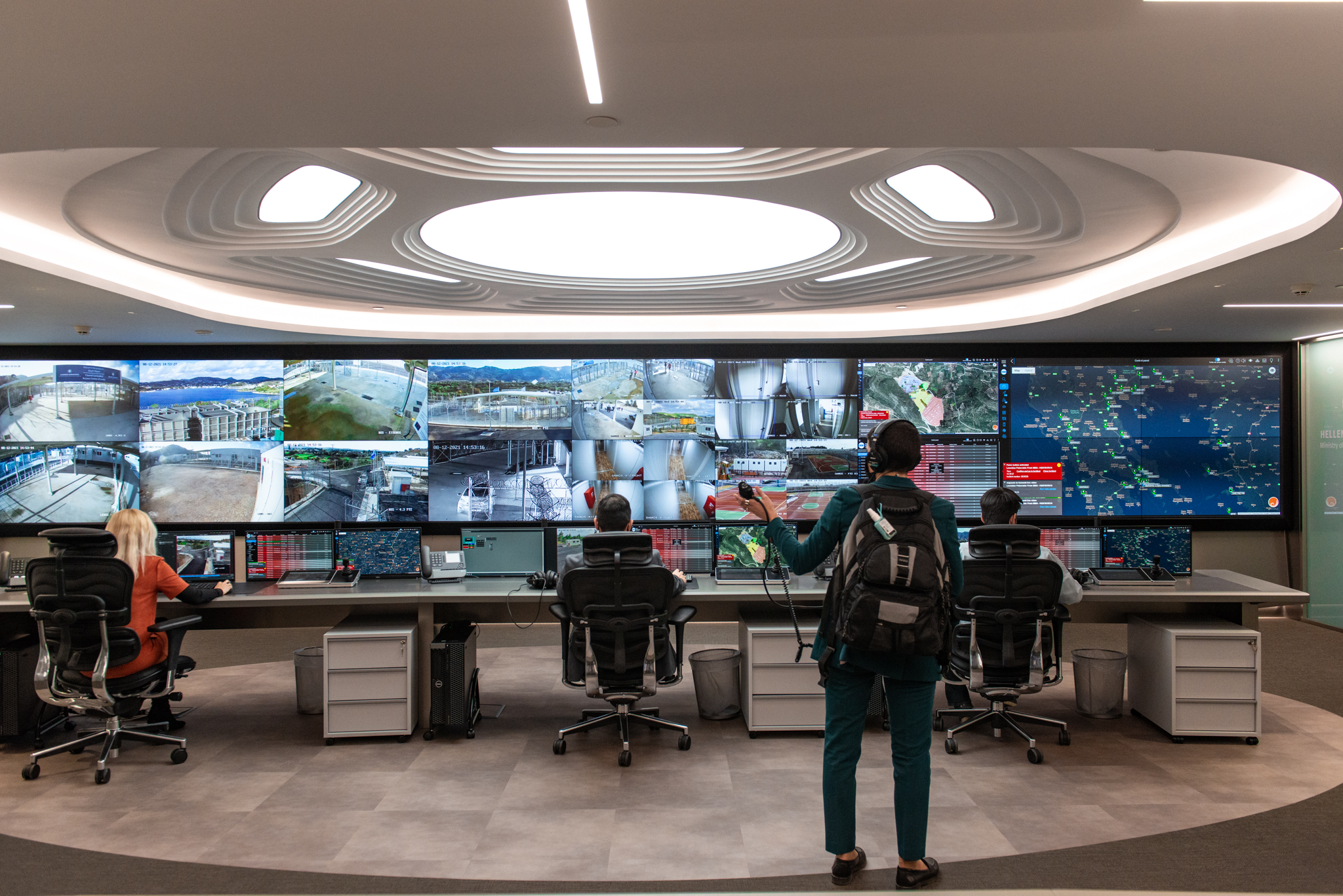
From border security in the deserts of Arizona to high-tech refugee camps in Greece to digital labour centres in Nairobi’s Silicon Savannah, Pinto travelled the world to make The Sandbox, shining a light on the true global scope of digital surveillance. These systems are bigger and more interconnected than we think—and by design, very few of the players know the full picture.
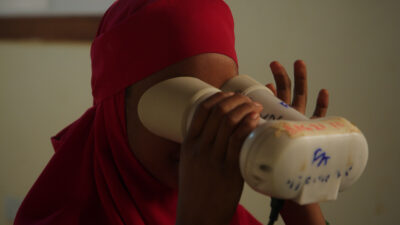
The film pulls back the curtain on some unsettling tech used for border security—AI, drones, biometric scanners, robo-dogs. But Pinto quickly realized that she wasn’t telling a “tech story”. This film is about the human lives being monitored and controlled, and the dangerous costs of living in a world where we’re all being watched. It’s a story about the plights of migrants, including a survivor of the 2023 Adriana shipwreck, and of vulnerable populations who find themselves training the very technology that monitors them.
Pinto began making the film in 2020, but as The Sandbox premieres 6 years later, its content is somehow even more relevant to today’s political unrest and increasingly digital world. Ahead of the Hot Docs premiere, we talked to Pinto about what inspired The Sandbox, filming in locations around the world, and starting conversations across the political spectrum.
Where did the idea to make The Sandbox begin for you?
Before I started working on the film, I trained as a lawyer, and my focus was on refugee law and international law. While I was doing that, I was also working as a documentary photographer. Once I was called to the bar, I started learning about something that was happening in Canada, which is that we started outsourcing some very specific immigration applications to algorithms. My family actually came to Canada under what’s called a humanitarian and compassionate grounds application when I was a child. This was the application that we were starting to outsource in the Canadian context to algorithms. And so I started to wonder, how could things have been different? Then it sort of grew in scope. It started by looking under these rocks that were close to home, and then the rocks felt like they got heavier and bigger and the things underneath got scarier. It started to sort of balloon out a bit organically, and that’s how the film was woven together.
It really is a global story. Why was it important to you to show the international scope of the issue?
Every one of these places is deserving of their own feature film. But it felt important for people to understand the scope of it… to understand the broad-reaching impact of how these things are all interconnected, and how it’s designed so that we don’t see or understand or have the capacity or the ability to push too far, to see too much, to open too many doors all at the same time. So it felt important for that to be a driving factor for the film. Also, so that people could understand that this underlying thread of neo-colonialism that we see in the Kenyan context, in the African context, is very much a part of all of it.
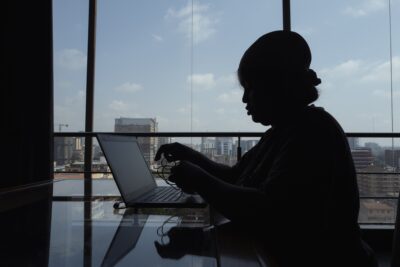
The film shows how vulnerable populations are targeted by this technology, but some also end up developing the technology itself. Can you speak to that?
The people who eventually this tech is used against end up participating in a system to perpetuate it, not of their own choosing, but because everyone has sort of been absorbed into this system, and it begets itself—sort of like a snake eating its own tail. It’s by design. Our participant in the film put it as “a new kind of slavery.” The idea there is that folks who may not have the choice participate in this thing because they’re trying to build a life for themselves as well.
There are so many chilling and unsettling moments in this film. Was there an experience you had while filming The Sandbox that really impacted you personally?
Many, many moments throughout the film and the film process. I think for me, having the privilege and the opportunity to spend almost a month on the ship with Sea Watch and with what those folks are doing was deeply moving. I don’t think anyone can come away from an experience like that and not be changed. I hope this film allows people to come to the theatre with an open mind, to know that this is going to be an experiential film. It’s a film that I think invites people across the political spectrum to be present and to see a variety of landscapes under which this system works.
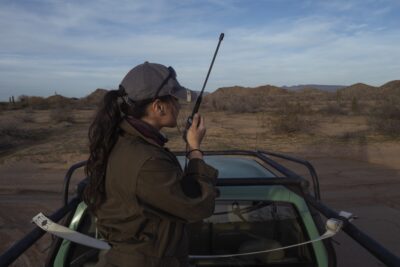
There was a point when the journalist you followed in the film asked, “Can you separate the technology from the politics?” Did that question keep coming up as you made the film?
Absolutely. Isn’t it a great question though? For all of us in anything that we’re doing, can you separate XYZ from the politics? That question really gets to the heart of the film, and is a question that I hope audiences just ask themselves. I hope that we ask ourselves this question as we’re moving through a world that is changing rapidly, and we are seeing things come up that we don’t know how to grapple with, or we’re being told to negotiate with in certain ways. I think that question is a helpful one, to orient each and every one of us in the many things that come up in our lives.
You filmed in the US before the current administration took over, but with the recent ICE raids, conversations about surveillance are even more at the forefront. How does it feel to have the film screening now, in the midst of our current political moment?
It’s obviously mixed feelings, because you never hope for a film like this to continue to be so “timely”. I think what’s telling though, is that we did film with a previous administration, and things were bad then. It goes to show that it’s not tied to a particular political moment, although we can certainly see that things are ramping up. These things actually have been happening for quite a while under traditionally liberal institutions as well. For all of us, it’s a good time to sort of shake the shoulders and say, “Okay, what is it that we want the future to look like?” And if it’s not this, what is it? And how do we get there? The film can’t answer all of those questions, but I hope that it can begin to ask the questions, and that the right folks start asking those questions too.
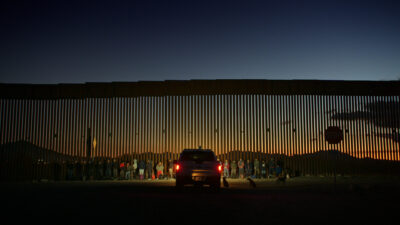
You mentioned that you hope the film engages people from across the political spectrum. What are your hopes for the conversations that can come out of The Sandbox?
Much like how we shot the film, which is that in every place there’s a sort of a slightly different refraction of the issue, there’s something slightly different that people are going to experience and feel pulled to in Kenya, for example, than they are in Arizona, than they are in Toronto, than they are in Italy. We just screened at CPH:DOX, which was amazing because at our second screening, they hosted experts in Danish immigration policy to speak to the film after it played, and tie it back to what was happening, very locally, very specific to Denmark, in a moment where they were just about to go to the polls. And it’s this type of thing that I hope that the film can do. I hope that it can begin to spark a conversation for folks who want to drill down in their own specific places about what’s happening.
This is your first feature-length documentary, and it was quite an ambitious undertaking. What does it mean to you to finally have the film being screened?
It was ambitious, as you mentioned, but I felt like it should be, given the subject matter and how important it felt to tell the story at this scope. It means a lot. Also to be screening next at Hot Docs, the industry was so supportive in my early days, through the accelerator, through the incubator, through the forum, through Dealmaker. So I’ve been really lucky to have a lot of industry support and then to be surrounded by a team who are so supportive.
 Follow Us On Instagram