


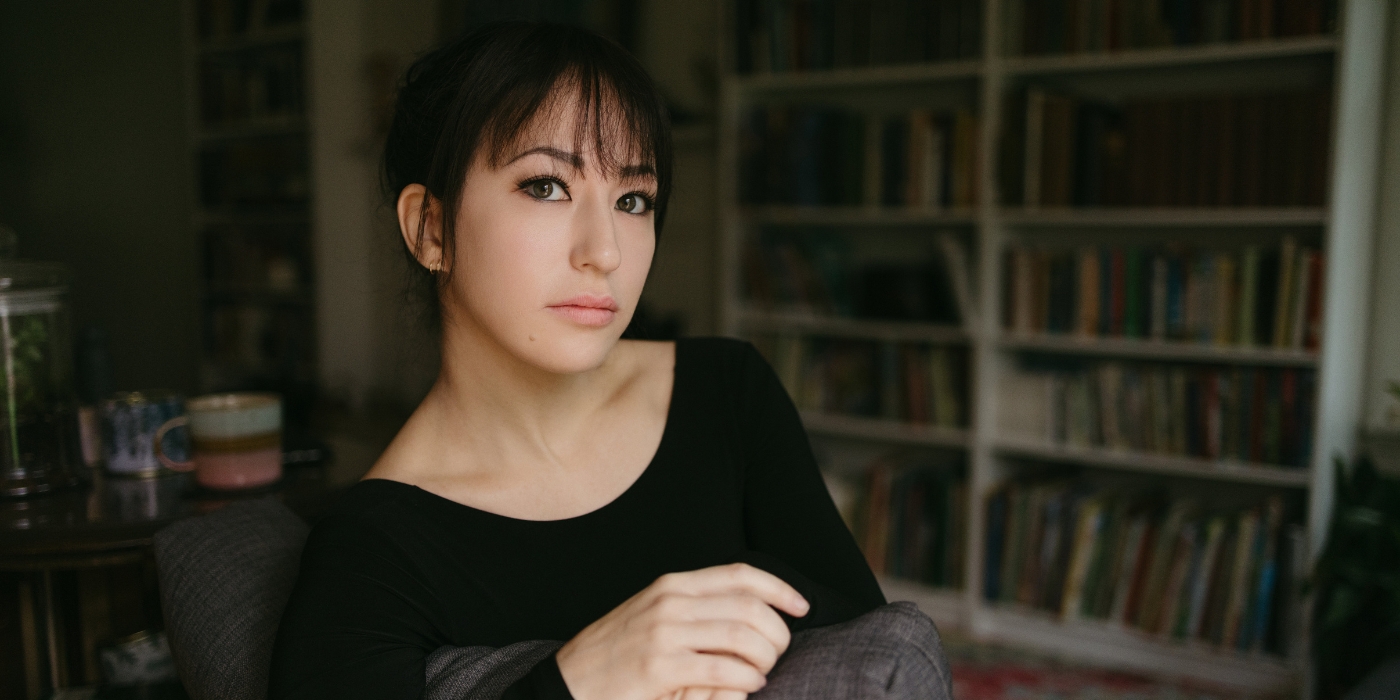
If you’re an avid reader, chances are you’ve heard of SenLinYu. Whether for their viral works of fanfiction or their bestselling debut novel Alchemised, they have taken the book industry by storm, cementing themselves as an author to watch (and a personal favourite writer of mine).
SenLinYu (she/they) grew up in the Pacific Northwest and studied classical liberal arts and culture. They started writing in the Notes app on their phone during their baby’s nap time. Their collected online works have garnered over twenty million individual downloads and have been translated into twenty-three languages. Alchemised is their first novel.
View this post on Instagram.
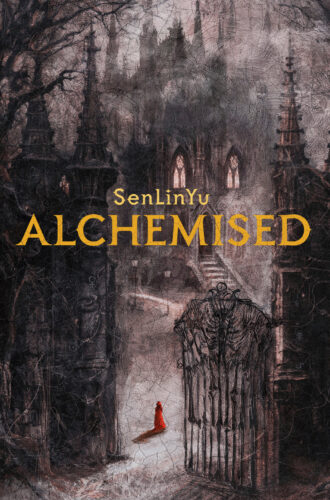
Set in a dark and fictional world, Alchemised follows once promising alchemist Helena Marino. In the aftermath of a long war, Paladia’s new ruling class consists of corrupt guild families and depraved necromancers, whose vile undead creatures helped bring about their victory. Helena’s friends and allies from the Resistance have been brutally murdered, her abilities have been suppressed, and the world she knew has been destroyed. According to Resistance records, she was a healer of very little import within the ranks. Helena, however, has inexplicable gaps in her memory of the months leading up to her capture, causing her enemies to wonder whether she is truly as insignificant as she appears. To uncover the memories hidden somewhere in her mind, Helena is sent to the High Reeve, one of the most powerful and ruthless necromancers in the new world. Trapped in his gloomy and crumbling estate, Helena’s fight to preserve herself, and her secrets is just beginning.
When I was offered the chance to interview SenLinYu, I JUMPED at the chance to better understand their process and their sources of inspiration.
It’s been several months since Alchemised was published, fast becoming one of the bestselling books of 2025. What have you learnt through this experience?
It’s been such a wild ride and I was very lucky because I had such an incredible team supporting and advising me. Going in, I didn’t even know what I didn’t know, and there are some aspects of publishing that are pretty oblique.
There were times I felt a bit vulnerable because I always knew the least about how anything worked, and had to ask people to pause and explain things to me like I was five. They were always very nice about it, but I felt very dumb. Ultimately, I’m glad that I asked those questions, because sometimes there were decisions that I thought were small that ended up having a huge impact months later, so being informed paid off.
You — like many other bestselling authors — got your start in the world of fanfiction. In what ways has being in the fanfiction space shaped the way you view storytelling?
The thing that really drew me to fanfiction was how it builds these incredible stories in the margins of traditional narratives. Of course, fanfiction is a vast space, so it’s hard to define it, but what was so revelatory to me as a teenager was discovering that stories could be so much more varied than the archetypes, formulas, and conceptual binaries in the published literature I was reading.
Literary canon can be so self-referential that it struggles to invite much deviation. To make a case for a story, someone else has to have already told something like it and been really successful at it, which isn’t a formula that encourages much innovation. As a result, fanfiction is a space where people who don’t see themselves represented in mainstream stories or their experiences reflected in traditional narratives can go to use the common interest of a shared fan community to have a voice, and potentially discover that they’re much less alone than the mainstream makes them feel.
You’re right. And fanfiction spaces can be very grassroots and engaged, so while you as a writer can have a bit more anonymity than in traditional publishing, there’s an intimacy and an earnestness in fanfiction — in people rabidly awaiting that next chapter dropping, creating fan theories and character art, learning how to bind books so they can keep a copy on their shelves — that, for better or worse is harder to replicate in traditional publishing. Is there anything you miss about writing fanfiction?
I do really miss the intimacy. The community sense of having a shared interest and participating in it together is something that I enjoyed so much. I was a reader in fandom for more than a decade before I started writing, and the fan community I was in wasn’t very big at the time, and so getting involved felt like hanging out with a bunch of new friends. Posting a story felt like going on an adventure together; I might have been the one writing the story, but their engagement and theories kept me on my toes. Working on Alchemised, the process of writing a very long book in relative isolation forced me to have to trust my instincts as a writer and not lean on the external validation of a comment section to tell me whether my plot twists had landed.
Alchemised asks a lot of questions about morality, how flexible it can be, and its place in war and revolution. What drew you to explore this in your story?
The inspiration was very personal. My maternal grandmother and her family were US citizens who were interned during WWII because they were Japanese. Growing up, a lot of people I knew were self-describedly ‘obsessed’ with US WWII history as this sort of ultimate Good triumphing over Evil moment in world history, but most of them were either oblivious or indifferent to the Japanese internment.
It made me realise how curated historical memory is, and so I started to look for what else was being left out, I was also very tired of war stories where it felt like the war was a stage dressing to show off how cool the characters or the worldbuilding was rather than horror. I wanted to write something that was more focused on how ruinous war is, that it eats people alive. The characters in Alchemised are all trapped inside its belly, being digested. Even the ones who make it out, they’re not whole in the end.
One of my favourite things in this book is the way you explore the themes of memory and legacy — how histories are so often told through the lens of the victor and how a story can be written if it’s just from one perspective. Can you tell our readers about your decision to explore this?
I’ve always found perspective really interesting and Alchemised pushed me to try to explore the outermost limits of telling a story from a single perspective.
Memory loss is explored on this intimate level with Helena, where her amnesia distorts and alters her understanding of the world and is ultimately both a weapon and a shield. Then if you zoom out, the story is also about memory loss on a historical level, how the victor’s version of history and all their omissions distort and alter everyone’s understanding of the world, how that shapes the identity of an entire country and creates the circumstances that cause the war. And then on a structural level, when you reach the end of the book, the cycle of historical memory loss is threatening to begin again, and no one notices because omissions are things that society is trained to overlook.
The idea being that as readers experience this recursion, they start to realise how easily crucial details can disappear when we’re taught to expect only certain narratives from our histories and stories.
View this post on Instagram
You’ve mentioned in your newsletter that worldbuilding is “one of your favourite things” — can you talk a bit about your world building process? Where do you start?
When I read Sci-fi and Fantasy, I’m always cross-referencing in my mind, trying to piece together how everything works. What’s the government structure, the economics, what kind of geography is there, and what’s the resulting industry and agriculture, what level of education exists, and how well do the characters understand their world? I find all of that super interesting, especially as a fanfic writer who often spends time trying to explain those questions in my fanworks when they aren’t answered.
With Alchemised, my starting point was necromancy as a magical ability, but I needed another magic ability for the other side to fight with, and metallurgy seemed like the perfect contrast. Since the tradition of alchemy included both the study of metals and the pursuit of immortality, it seemed like the perfect way to encompass both.
All of Alchemised’s underlying ideas about souls, purity, the specific form of sexism, etc are rooted in the Greek philosophy and early Christian practices that historical alchemy was built on, I just reframed them slightly.
Alchemised is a genre-bending story — with heavy elements of science fiction, fantasy, horror, and even some elements of romance. What was your favourite of these genres to explore? Why?
The way I approach genre in my writing is that it’s something I’m familiar with but not beholden to. However, I do believe it’s important to understand the genres you’re working with, because that’s where expectations are coming from; it’s necessary to be aware of what people are anticipating, even if the goal is ultimately subversion.
Alchemised was purposefully written to subvert most of the genres it intersects with because it’s a critique of the assumptions that exist around wartime narratives, and how society has been taught to understand heroism and strength.
I think the genre I enjoyed playing with the most was the gothic aspect, it was definitely the genre that I did the most research on while writing because beyond philosophically aligning with what I wanted Alchemised to do, it’s a genre that encompassed both the horror and romance elements in the story.
What are you reading now? What books and writers inspire you?
To be honest I’m a mood reader, I bounce around a lot. Most recently I read Ken Liu’s silkpunk series followed by his new sci-fi. I tend to find most of my inspiration in nonfiction or art, and then I process the ideas by crafting a story around them. Recently I’ve been reading through the works of the anthropologist Edmund Carpenter and getting a lot of new ideas.
Can you talk a bit about what’s next for you?
I’m currently working on another standalone and I’m in a simultaneous research and drafting stage with it right now. It’s a very different process from Alchemised because Alchemised had such a concrete plot, writing it was a lot like constructing a puzzle, having to do a lot of work to make sure all the pieces fit together perfectly but always knowing exactly what it was going to be in the end. With this new project, I feel more like I’m carving something, and at the moment I’m still trying to find the angel in the marble and set it free.
This interview has been edited for length and clarity.
–
Ameema Saeed (@ameemabackwards) is a storyteller, an avid bookworm, and a curator of very specific playlists and customized book recommendations. She’s a book reviewer, a Sensitivity Reader, a book buyer at Indigo Books & Music, and the Books Editor for She Does the City, where she writes and curates bookish content, and book recommendations. She enjoys bad puns, good food, dancing, and talking about feelings. She writes about books, big feelings, unruly bodies, and her lived experiences, and hopes to write your next favourite book one day. When she’s not reading books, she likes to talk about books (especially diverse books, and books by diverse authors) on her bookstagram: @ReadWithMeemz
 Follow Us On Instagram