



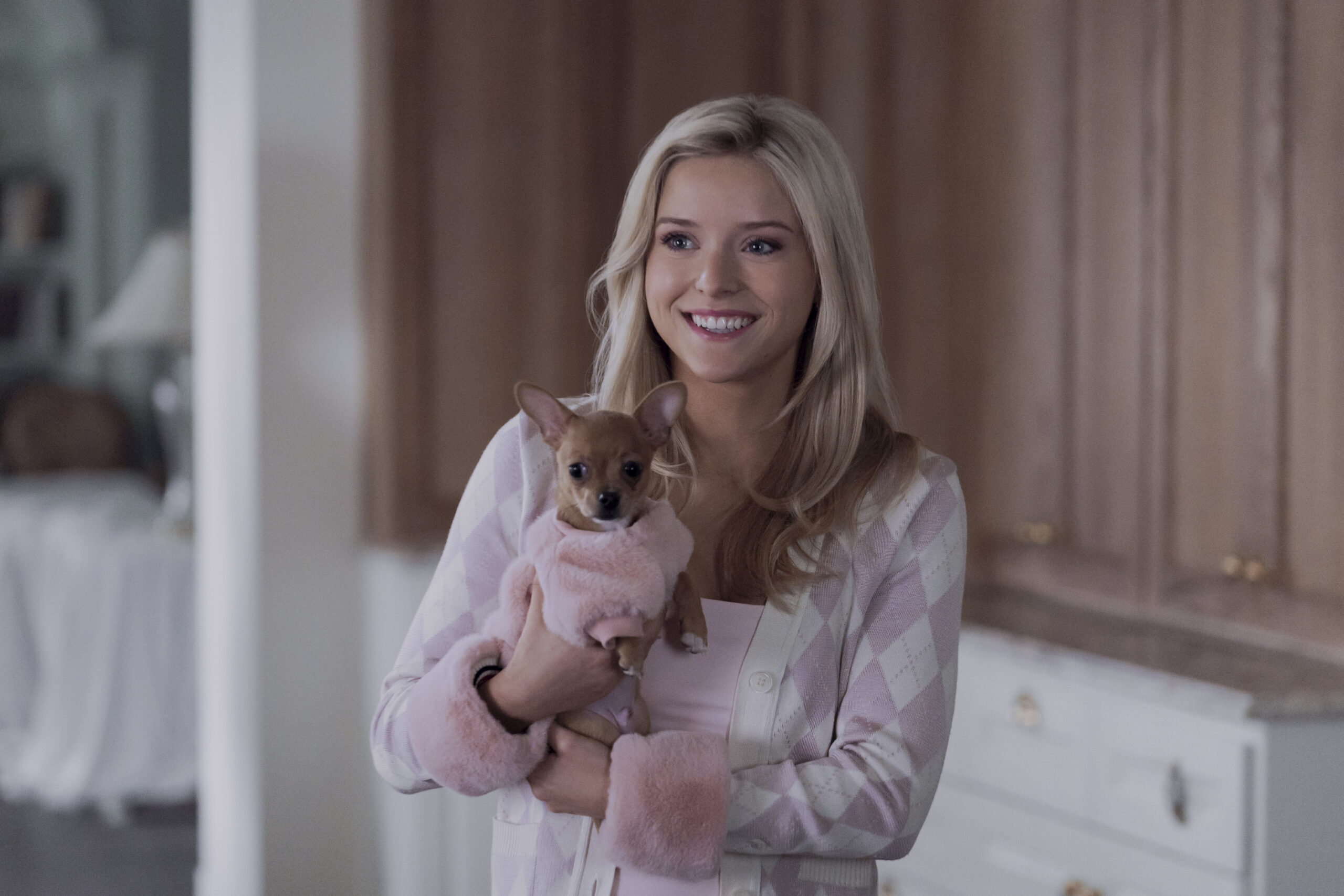
When I sat down with my two-month-old to watch the new Prime Video series Elle, as is my right as a recently postpartum millennial, I went in expecting something akin to The Carrie Diaries (RIP). What I got was a fun-filled binge complete with a movie-accurate Elle Woods, played brilliantly by newcomer Lexi Minetree. Elle strikes a perfect balance of ditzy and self-aware, and is full of flawed but lovable characters, including a standout performance by June Diane Raphael as Elle’s mom, Eva—all set against the unexpected backdrop of grunge-era Seattle.
Just like every other mid-thirties woman on Earth, I’m an OG fan of Reese Witherspoon’s portrayal of Elle Woods. As a pre-teen when Legally Blonde came out, seeing a woman succeed while fully embracing her femininity was inspiring. Chock-full of iconic lines like “What, like it’s hard?” and “We’re both Gemini vegetarians,” the film spoke to a generation of young women who, while in pursuit of being feminist, were embarrassed to admit that their favourite colour was pink. A smart, beautiful, well-dressed woman on a mission to… well, yes, get a guy, but also to prove she was more than her Valley-girl upbringing, was cemented into early-aughts pop culture.
Now, a very respectable 25 years later (honestly, I’m shocked it took a studio this long to push a prequel through), Prime Video’s Elle brings a high school-aged Elle Woods to our screens. The series follows a similar formula to the movie, taking Elle out of her bright, comfortable California element and thrusting her into a much more “serious” environment. Instead of the collegiate East Coast, we find her in a rainy Seattle high school, where it’s quickly made clear to her that “pink is not a personality.” Unapologetically herself, Elle slowly wins over her classmates while getting to the bottom of a not-quite-murder-level conspiracy.
After devouring the season in just a few days (this is the equivalent of a single afternoon for anyone without a newborn and toddler at home), I was eager to see what the critics thought. I can’t say I was surprised by the overall mixed-to-negative sentiment that has it sitting at 54% on Rotten Tomatoes. Not because I agree, but because this is exactly the kind of show a critic loves to hate: existing IP, ripe for marketing partnerships (cough, cough—L’Oréal Paris) and centred on a young female character who openly admits to being shallow.
The main criticism I’ve seen is that the storyline isn’t believable as a backstory. How could the ditzy blonde at the beginning of Legally Blonde have spent her formative years in Seattle, surrounded by teenage activists in plaid?
To me, it seems the art of suspending reality for pure entertainment is being lost. But for the sake of argument (something Elle Woods enjoys canonically), why couldn’t this be her backstory? Don’t we all spend our teenage years trying on different personalities and interests? Who’s to say a young woman can’t adopt a slightly different persona for a period of time? After all, isn’t it canon that Elle is adaptable? She uses her tenacity and earnestness to thrive in any environment, from the rainy shores of Seattle to a sunny California sorority house, and ultimately, the halls of Harvard Law.
Another popular critique is that the series leans too heavily into tropes—love triangles, mean girls, easily avoided misunderstandings. But one critic’s trope is another’s homage. Personally, I chose to enjoy these elements as nostalgic nods to John Hughes’ Pretty in Pink and The Breakfast Club, Amy Heckerling’s Clueless and many other beloved coming-of-age flicks. Watching these dynamics play out felt less like lazy writing and more like a perfectly mascaraed wink for anyone who grew up on ’80s and ’90s teen cinema.
From where I’m sitting, Elle gave us everything we could have asked of this iconic IP, keeping in mind that it has to cater to both its existing fanbase and a brand-new generation. It stays true to the character’s core at every turn, punctuated by Minetree’s flawless comedic delivery. It’s camp (again, highly canonical) in the best way—complete with fully choreographed dances, a major plot point set at a Rainforest Cafe (featuring an animatronic elephant, no less), and endless references to the original movie. Elle is nostalgic popcorn viewing at its absolute best. And that’s not even getting into the fashion, which is, in a word, fabulous.
Somewhere along the way, has the bar for television become so high-brow that we’ve lost the plot on being entertained? Do we forget to ask ourselves how a show makes us feel before we start dissecting it for all it gets wrong? All I know is that when the credits rolled on Elle, I felt the exact same surge of feminine pride as I did when Reese threw her graduation cap in the air at the end of Legally Blonde; the film that inspired me to finally, unapologetically, embrace pink as my favourite colour.
‘Elle’ is available to stream now on Prime Video.
 Follow Us On Instagram