



TW: Mentions of sexual assault.
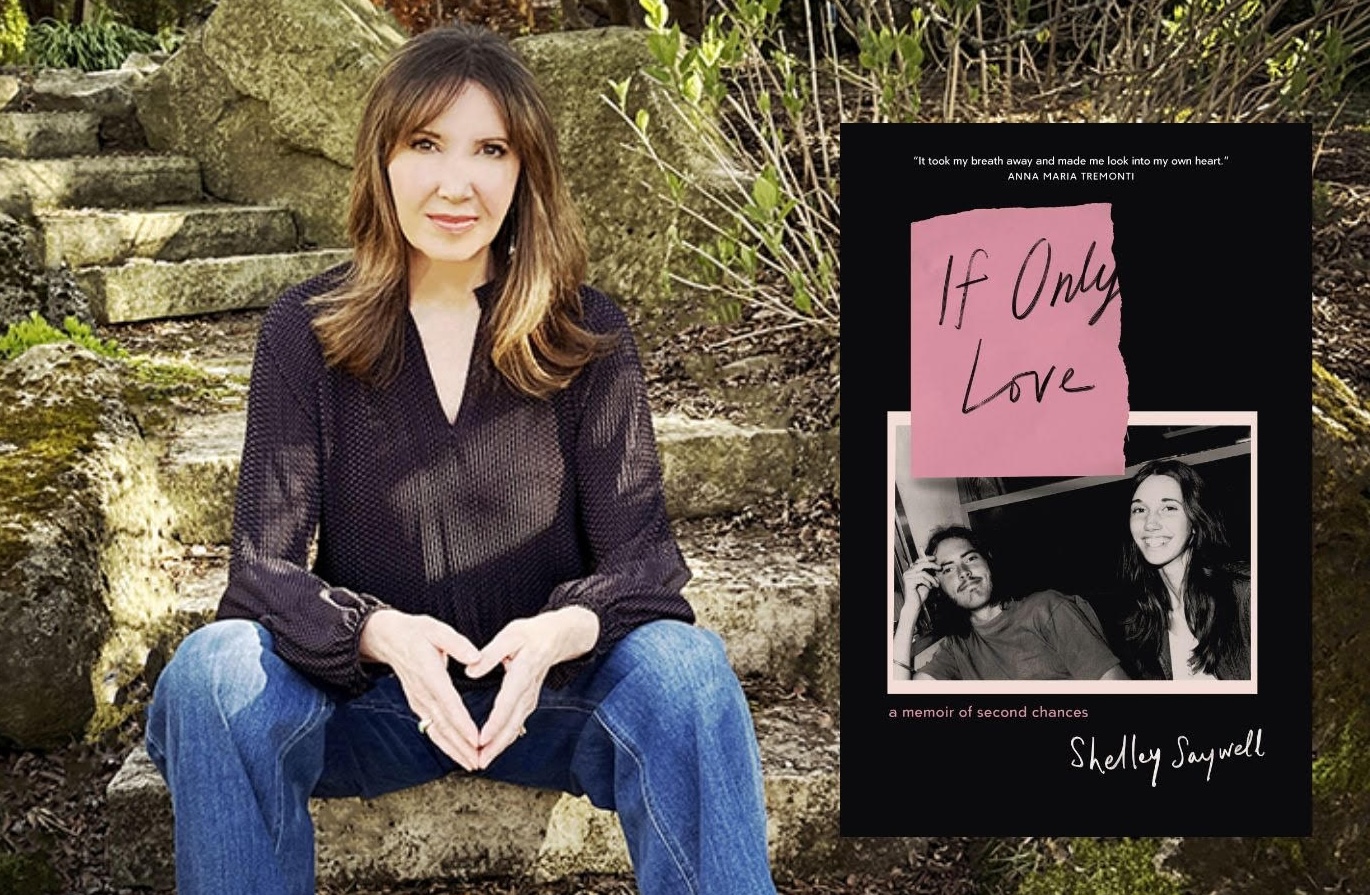
Not everyone gets a second chance at love. But when Shelley Saywell got hers, she knew she couldn’t let it slip away. In her new memoir, If Only Love, the Emmy award-winning documentary filmmaker tells the epic story of her second-chance romance spanning more than 30 years, two continents, and hundreds of love letters.
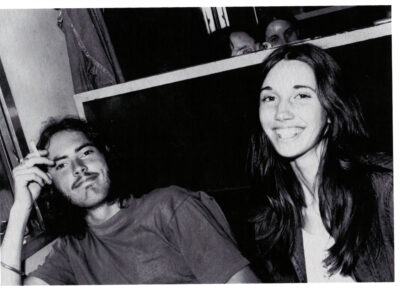
On her first day at an international high school in Japan, Saywell met Daniel Peterson. “I fell madly, passionately, instantly for this guy, the first time I saw him,” she says. He was her first love, but they parted ways soon after graduating. Almost 30 years later, the unthinkable happened—Peterson reappeared in Saywell’s inbox.
“When I was presented with my second chance, I knew one thing: I am not going to miss this,” Saywell says. “I didn’t know how it would work out. I didn’t know if chemistry lasted. I didn’t know if we’d feel the same way…but I was not going to miss the chance to find out. I moved heaven and earth, and so did he, to find out again.”
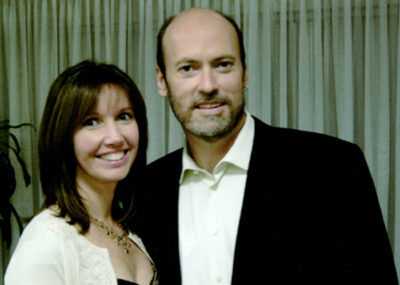
Seven months and hundreds of emails later, the long-lost couple finally reconnected face-to-face. Three days later, they got engaged. But this love story doesn’t have a happily ever after. Fifteen years into their marriage, Peterson was diagnosed with stage four cancer, and sadly passed away. If Only Love is a non-linear love story, weaving together memories of Saywell’s youth in Japan, excerpts of the email exchanges that made her fall in love again, and vignettes of her grief after Peterson’s passing.
“This book is a duality. It’s about grief and it’s about love, and you really don’t have one without the other, in a way,” Saywell says.
Known for her work as a documentary filmmaker, Saywell spent her career making films that shone a light on social justice and conflict around the world, from Afghanistan to Bosnia to Iraq and beyond. She’s won numerous international awards and screened her documentaries at film festivals worldwide. But after her massive loss, it didn’t feel right to jump back into filmmaking.
“When Daniel died, all my friends and loved ones said, Shelley, the cure is to go back and make another film, right away. Jump in. That had been my passion. But I was really debilitated. I really, I really fell apart. I wasn’t ready, and didn’t know if I wanted to make a film.”
Saywell spent months alone in her house, overcome by her sadness. Then, she came across an advertisement on Facebook for a memoir writing course at the University of Toronto, and something clicked. The course was taught by Marina Nemat, author of Prisoner of Tehran.
“She’s a brilliant writer and an incredible teacher,” Saywell says. “I was still really numb, and I wasn’t really sure how I could put one foot in front of the other, but sitting in her class was very peaceful and comforting and actually stimulating.”
Soon after, Saywell found herself alone in a tiny apartment in Italy, in a village where no one spoke English. For a month, she had no internet—only her computer, her notebooks, and her yoga mat. In that stillness, she was able to fully immerse herself in the writing process—scouring through her emails to Peterson, poring over journal entries, and falling back into the memories of their first years in Japan. “It was actually a way to stay connected with Daniel,” she says. “It was like my little treasure, it was my happy place.”
Over the course of 8 years, Saywell would put down the book and return to it, cherishing any opportunity she got to relive her most precious memories of Peterson. When she began to think about publishing it as a memoir, her experience as a filmmaker gave her the confidence to share her deeply personal story with the world.
“I said, Shell, you have been making documentaries for 30 years, asking people to trust you and tell you the most painful, the most intimate, compelling stories of their lives. And I thought, well, if I could ask people to do that, then surely I can do that.”
After high school, Saywell tried to find Peterson again, travelling to Hawaii on her way to Japan. In her memoir, she shares that on that trip, she was raped—and that the perpetrator went on to sexually assault several other women. It was only through the writing process that Saywell made the connection between her traumatic experience and the themes in many of her films.
“When I was writing the memoir, I realized, oh my gosh, that was—for me—essential,” she says. “That was a throughline in my life, that I needed to give voice to women who had experienced this.”
Several of her films have shone a spotlight on violence against women, including Rape a Crime of War, In the Name of the Family, and The War at Home. Now, Saywell takes pride in helping the next generation of women filmmakers tell their stories.
“One of the things that I’ve tried to honour is supporting other women and mentoring young women filmmakers,” she says. “One of the great joys of the response to the book has been the young women.”
When If Only Love was published earlier this year, the book became an instant National Bestseller and a Heather’s Pick at Indigo. Saywell has received an outpouring of support since the release, but not necessarily from her expected demographic.
“I’ve had lots of women in their 20s and 30s reaching out, because I think there’s a despair around connection and really finding someone, really trusting and believing in love,” Saywell says. “It’s a dark time in the world, and people are looking for connection. People are looking for stories about real love, true love. And this was really a big, epic love story.”
View this post on Instagram
At first, Saywell wasn’t sure if her experience would resonate with readers. She was used to telling stories about other people’s plights, stories she knew were important to share with the world. But eventually, it became clear just how universal her own love story was.
“Everybody’s had a first love. Everybody remembers that first painful crush that’s debilitating and absorbing. Most of us have a what-if. What if I’d made that choice? What if that person that I fell for walked back into the room? What if I had a second chance?”
The title of her memoir is based on Sheryl Crow’s song It’s Only Love. The track was released in 2002, the same year that Peterson came back into Saywell’s life. For a long time, she told us, the song was her mantra.
“If only love comes around again / it will have been worth the ride…I played that song till I wore it out, because that’s how I was feeling. If I get the second chance, if it works out, oh my God, everything that I’ve done in my life will suddenly make sense.”
If Only Love is available for purchase online and in bookstores now.
 Follow Us On Instagram